
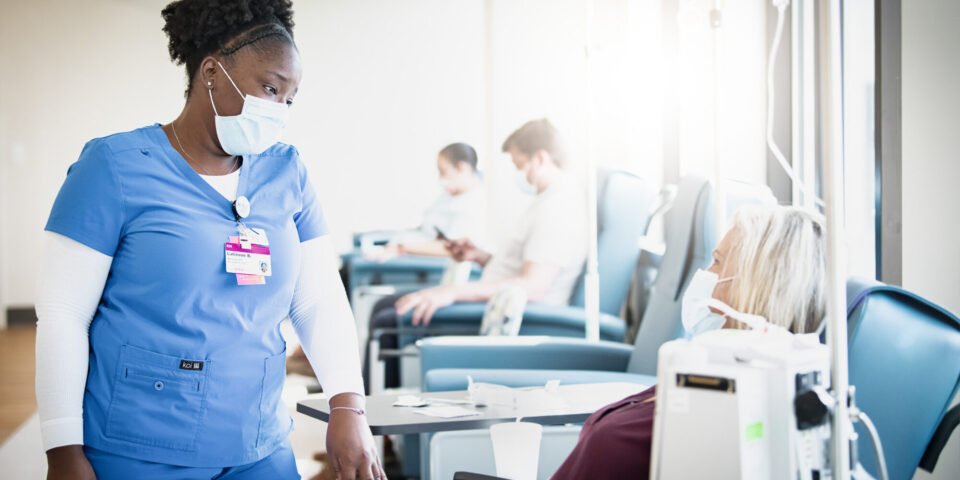
Battling breast cancer beside you: Meet the team supporting your care

When you’re diagnosed with breast cancer, it can feel like you’re suddenly meeting a lot of new people. You may see different doctors, nurses and specialists, all with different roles in your care. While that can seem overwhelming at first, there’s an important reason for it: Breast cancer care is a team effort.
Surgical oncologist Brian McKinley, MD, explained what your care team may look like during treatment for breast cancer.
Your treatment team will be bigger than you think
“Many people assume breast cancer treatment involves only a surgeon and an oncologist,” said Dr. McKinley. “In reality, there may be several healthcare professionals involved in your care, depending on your diagnosis and treatment plan.”
Your team may include:
- Surgeons
- Medical oncologists
- Radiation oncologists
- Nurse navigators
- Nurses and advanced practice providers
- Breast imaging specialists
- Pathologists
- Genetic counselors
- Physical therapy and lymphedema specialists
- Nutrition experts
- Plastic and reconstructive surgeons
- Mental health professionals
- Fertility specialists
- Child life specialists
- Other support staff who help coordinate your care
You may not work with every one of these specialists, but each plays an important role in helping patients receive comprehensive care.
What does each member of the team do? Let’s start with surgeons and oncologists
“For starters, your surgeon helps determine whether surgery is needed and discusses options such as lumpectomy or mastectomy,” said Dr. McKinley. “You’ll also speak with a medical oncologist who specializes in treating cancer using medications like chemotherapy, hormone therapy, immunotherapy and other treatments.”
A radiation oncologist determines whether radiation therapy would be effective as part of your treatment plan and specific type of breast cancer. Every treatment plan looks a little bit different, because every patient is different. That’s why it’s essential to have multiple specialists working together to craft the best treatment plan for you.
Helping you navigate the journey: Nurse navigators and more
“Nurse navigators are often a patient’s true guide through their treatment,” said Dr. McKinley. “They help to coordinate appointments, answer questions and connect patients with resources and support services like survivor groups, nutritional or spiritual support services and more.”
Plus, you can’t forget the office nurses that continue to support you through treatment. They’ll be there to help you when it comes to managing side effects, understanding your next steps and knowing who to call if concerns arise.
Behind-the-scenes experts you may not see, but they’re essential pieces of the puzzle
“Before treatment decisions are made, several specialists work as a team to gather important information that helps to ensure your treatment plan is personalized,” said Dr. McKinley. “Some you may meet as part of your cancer journey, some work behind the scenes, but they’re just as dedicated to your care as your oncologist.”
Breast imaging specialists perform and interpret mammograms, ultrasounds and other imaging studies, pathologists examine biopsy samples to figure out exactly what type of breast cancer is present and genetic counselors may recommend testing to help identify potential inherited risk factors that could change up your treatment plan or give you information to help family members and other loved ones know their own risk.
Breast cancer goes beyond physical health, and so does your care team
“Breast cancer affects more than just physical health,” said Dr. McKinley. “It can feel like the ground has been pulled out from under your feet. Some patients experience very normal and understandable symptoms of depression or anxiety, struggle to maintain their appetite and energy, worry about the effects of treatment on their future fertility or simply feel like they’re lost with no one to talk to who truly understands.”
Depending on your situation, you may work with:
- Clinical psychologists or counselors who provide emotional support
- Nutrition specialists who help you maintain healthy eating habits during and after treatment
- Lymphedema specialists who help prevent or manage swelling after surgery
- Physical therapists who assist with recovery and mobility
- Fertility specialists who discuss options for preserving fertility before treatment
- Child life specialists who help families talk with children about a parent’s cancer diagnosis
Reconstructive surgeons and prosthetic specialists
“While some patients choose breast reconstruction after surgery, others may prefer to work with prosthetic specialists to have breast prostheses fitted,” said Dr. McKinley. “These options help to preserve the appearance and shape of breasts to maintain emotional and physical comfort, but not everyone chooses either.”
If you do choose to pursue breast reconstruction, plastic and reconstructive surgeons will work with you to understand your options and then perform the reconstruction procedure you choose when it’s appropriate.
Teamwork: The great strength of modern cancer care
“Rather than working separately, your healthcare providers communicate with one another, review test results together and coordinate treatment recommendations,” said Dr. McKinley. “This collaborative approach helps ensure that every aspect of your care is considered and that you, as a person, are at the center of every conversation and consultation.”
From diagnosis to recovery, your care team is beside you every step of the way.
Cancer care, inspired by you
Every patient’s cancer is different. Using clinical research and advanced therapies, we provide treatment unique to you.
Cancer Care Near You