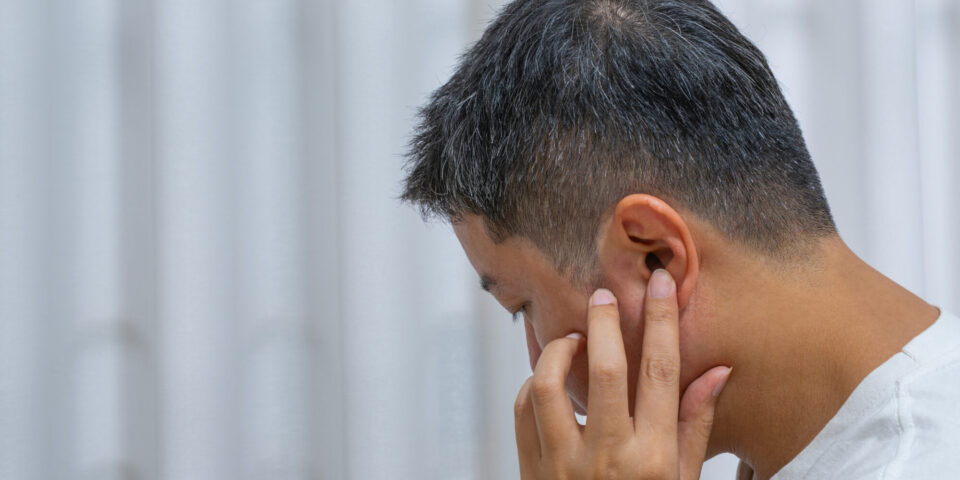
What causes a “clicky” ear?
Do you experience clicking, popping or crackling sounds in the ears? It’s normal to hear this on occasion, usually when swallowing or during pressure changes. However, some people experience discomfort due to their “clicky” ear and may suffer from a lower quality of life or sleep problems as a result.
What can you do when you experience a “clicky ear” disrupting your day?
What causes a “clicky” ear?
There are many possible causes for a clicky ear, including:
- Eustachian tube dysfunction: The Eustachian tubes connect the middle ear to the throat and are responsible for draining fluids and equalizing pressure. When they become inflamed due to allergies or a cold, it could cause clicking sounds.
- Impacted earwax: While earwax usually works its way out of the ears on its own, it can become impacted and cause clicking and other symptoms.
- Meniere’s disease: Meniere’s disease is an inner ear disorder that causes episodes of hearing loss, dizziness and tinnitus (phantom sounds in the ears).
- Temporomandibular joint (TMJ) disorder: This disorder involves pain and other issues with the jaw joint. Among jaw pain, stiffness, limited mobility and headaches, TMJ disorder can cause clicky sounds in the ears.
Diagnosing the cause of a “clicky” ear
When trying to diagnose the cause of the strange sounds and sensations in your ear, a doctor will first conduct a physical exam. They’ll want to get a closer look to see if the cause is impacted earwax, inflammation after an infection or something more serious.
Your doctor will check in your ears using an otoscope to get a clear look. They may also need to order more specialized tests.
How to get rid of those “clicky” ear noises
In some cases, simple home remedies available over the counter, such as softening ear drops to help with impacted earwax or white noise machines to help provide relief for tinnitus or Meniere’s disease symptoms, may be all that’s needed. If you have heavily impacted earwax, your doctor may be able to have the impacted earwax removed right there in the doctor’s office.
In some cases, ear tubes may be placed to help with fluid trapped in the middle ear. This is a quick outpatient procedure and shouldn’t cause much disruption to your daily life. For those struggling with TMJ, a bite guard can help as well.
Don’t try to remove seriously impacted earwax on your own, and don’t use Q-tips or stick tools in your ear to attempt to remove wax or ease symptoms. This may make the problem worse or even cause injury.
Schedule an appointment with your doctor for a closer look.
Find the care you need, close to home
Our primary care physicians provide well visits and everyday care when you need it with compassion and expertise.
Find Primary Care Near You